Book Back Matter
Evidence Station A · The Approved Shelf
Power · Preservation · Labels · Memory

Arius, Athanasius and the Approved Shelf.

Historical notes on theological dispute, imperial power, preservation, labels, canon development, and the way later generations inherit the winner’s shelf and memory.

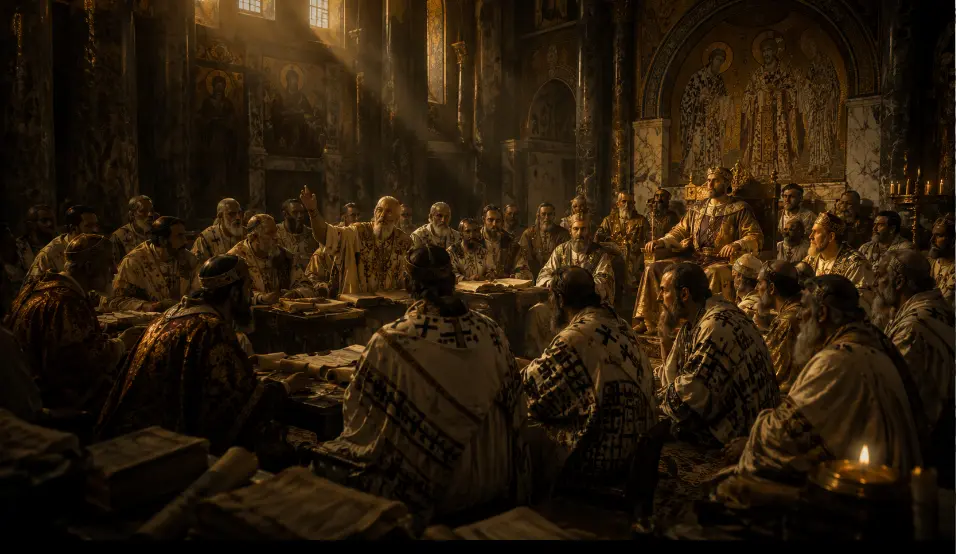
Generated cinematic scene of the Council of Nicaea Nicaea · 325
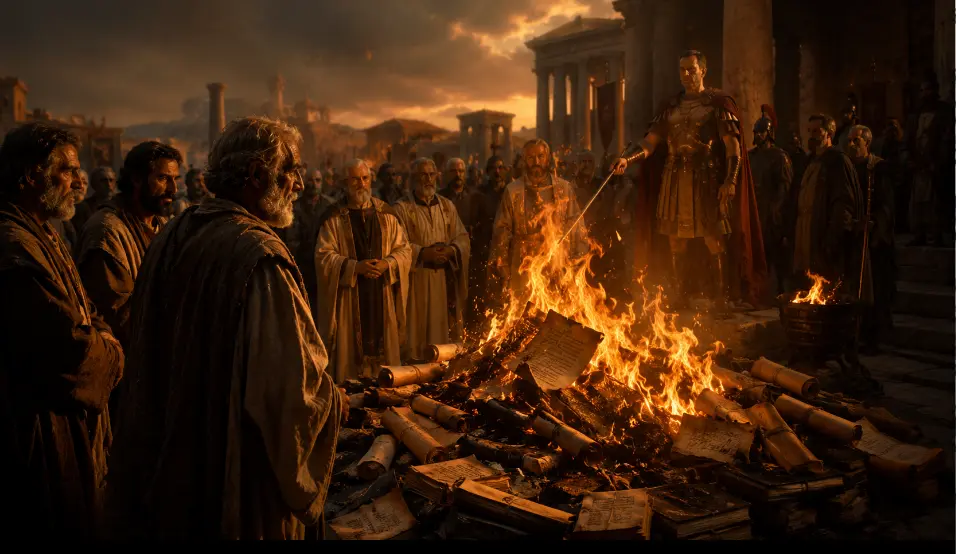
Generated cinematic scene representing the burning of Arius's writings Arius · Writings Burned
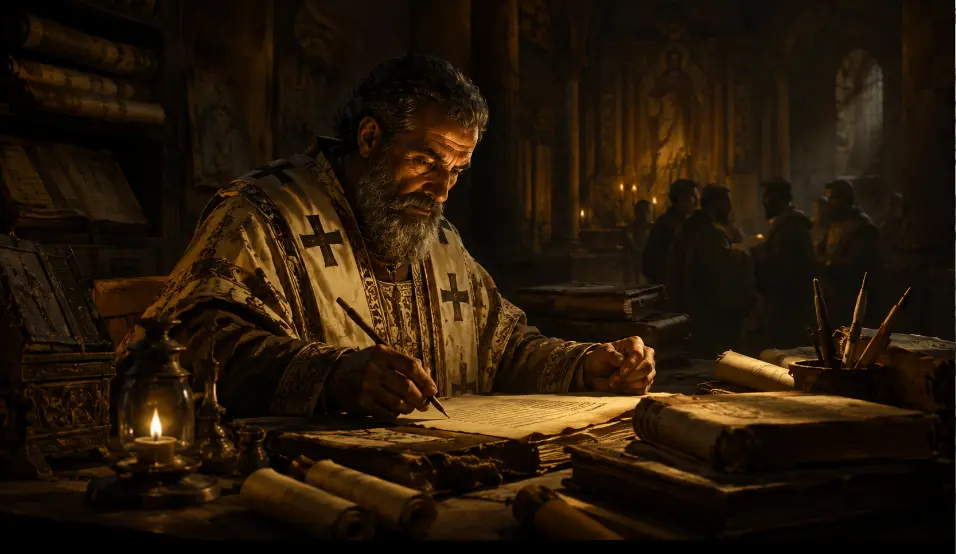
Generated cinematic scene of Athanasius preparing the Thirty-Ninth Festal Letter Athanasius · 367
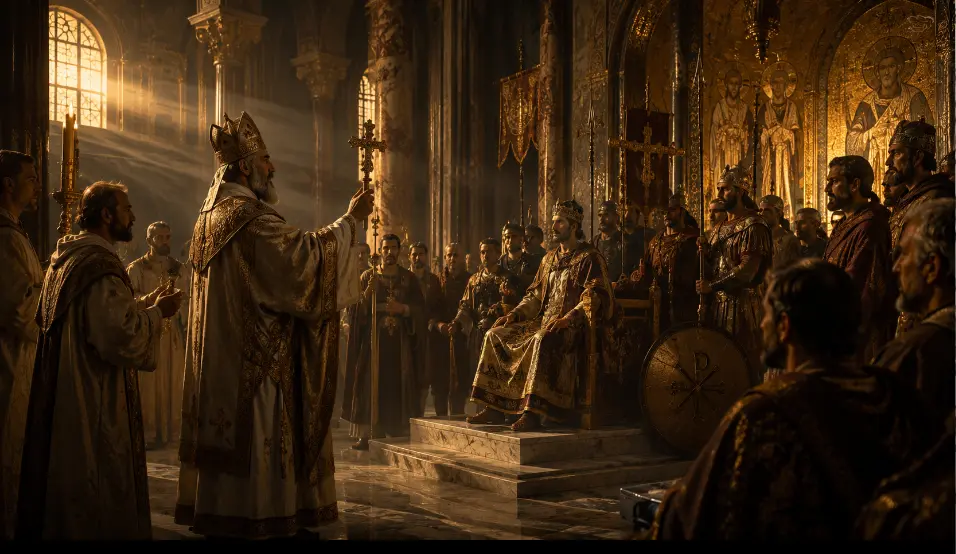
Generated cinematic scene representing state-backed orthodoxy Empire · Orthodoxy
The Prophecy Journey · Evidence Station A
Four records. One historical question: what shaped the approved shelf?

Project Unveiled historical evidence gallery · Appendix A

Complete Public Edition. Appendix A is published as part of the complete online reader. Documented corrections, fuller historical context, and stronger primary-source evidence remain welcome.

These notes keep the historical claims in Project Unveiled clear, cautious, and checkable. The purpose is not to prove Arius right or Athanasius evil. The purpose is to show how theological dispute, imperial power, preservation, labels, and memory can become tied together.

Arius and the Controversy

Arius is treated here as a real figure with real standing, not as a random outsider. Historical summaries identify him as a presbyter from Alexandria, and the Arian controversy became large enough that Constantine called the Council of Nicaea to address division over the relationship of the Son to the Father.

The Council of Nicaea did not create the Bible. The canon developed over time. Nicaea addressed doctrine and unity, especially the Arian controversy, and produced a creed that condemned Arianism. This distinction matters because Project Unveiled is not built on the weak claim that Nicaea created the Bible.

The Nicene Dispute

Nicaea's central Christological dispute involved the Son's relation to the Father. The Nicene position used homoousios - of the same substance or essence - to affirm the Son's full divinity with the Father. The term remained contested and debated throughout the fourth century.

Imperial Enforcement

Constantine ordered Arius's writings burned. A translated imperial order preserved by FourthCentury.com says Arius's writings were to be cast into the fire and states severe punishment for concealing them. Christian History Institute likewise summarizes the order to burn Arius's books and the severe penalty for concealing copies.

Athanasius and Historical Balance

Athanasius should not be flattened into a cartoon villain. He became one of the strongest defenders of the Nicene position, suffered exile, and played a major role in the fourth-century struggle over doctrine. Still, no sincere or courageous church leader should become unquestionable.

The Approved Shelf

Athanasius's Thirty-Ninth Festal Letter, dated 367, is historically important because it lists the twenty-seven New Testament books recognized today. The letter also warns against apocryphal writings associated with heretics and describes such writings as a danger to the simple.

Interpretive note: when one side wins with imperial help, later generations inherit the winner's shelf, labels, and memory of the loser. This does not automatically make the loser right. It does require honest seekers to ask how truth, power, preservation, and fear shaped what survived.
Key Line The shelf was not only about books. It was about access, authority, memory, and fear.
Sources used for this appendix include Christian History Institute, FourthCentury.com, Early Church Texts, New Advent, Text & Canon Institute, History Today, and EBSCO Research Starters. Full source details are listed in Appendix E.
Historical Guardrails

What This Appendix Does—and Does Not Claim

The appendix strengthens the book by separating documented history from oversimplified claims.

Correction

Nicaea Did Not Create the Bible

The council addressed doctrine and unity, especially the Arian controversy. The biblical canon developed over time through a different historical process.

Documentation

Imperial Power Was Involved

Constantine’s order against Arius’s writings is presented as evidence that theological conflict, state authority, destruction, and preservation became linked.

Balance

No Cartoon Villains

Arius is not automatically declared right, and Athanasius is not reduced to evil. Both are placed inside a contested historical struggle.

Check the Record

Historical Claims Must Remain Open to Correction

Readers are invited to submit primary sources, scholarly corrections, stronger citations, or evidence that materially changes the historical account.

Support the Work

Stay connected to Project Unveiled

Receive new chapter highlights, evidence updates, and occasional reader invitations. No daily spam.

We do not sell, rent, or trade your personal information. Ever.